Backend · team of 2
Can a claim be flagged before it reaches a person, without automating the rejection?
InsureTrust — Insurance Claim Fraud Detection
Two independent signals on every claim: a gradient-boosted model scores behaviour and metadata, while image forensics checks the submitted documents for manipulation.
- Role
- Backend developer, two-person team
- Award
- 1st Prize, FinTech domain — MIT ADT AI Grand Challenge
- Built with
- Python · XGBoost · Computer Vision · Image Forensics · Django

A claims screening pipeline combining two independent signals. A gradient-boosted model scores each claim on behavioural and metadata features, while a separate image forensics stage inspects submitted document photographs for signs of digital manipulation. The two scores combine into one verdict that routes a claim to review rather than approving or rejecting it outright. Built as backend developer on a two-person team.
Problem
Fraudulent insurance claims are rarely obviously fake. The documents look right and the numbers are plausible, but the submitted images often carry traces of editing, and the claim metadata often carries patterns that a human adjuster reviewing one case in isolation cannot see. The brief for the FinTech domain of the national MIT ADT AI Grand Challenge was to surface both kinds of evidence before a claim reaches a person.
Approach
The two signals are deliberately kept independent, because they fail differently. The XGBoost model reasons over tabular claim features and is good at spotting claims that are statistically unusual, but it has no view of the documents themselves. The image forensics stage inspects photographs for tampering artefacts and metadata inconsistencies, and can catch a doctored document attached to an otherwise ordinary-looking claim. Combining them means a claim has to look clean on both axes to pass. Output is a risk verdict that flags a claim for human review, which keeps the adjuster in the decision rather than automating a rejection. The system took 1st Prize in the FinTech domain.
How the model splits claims
Point at the plot, or focus it and use the arrow keys: a new claim, scored as it moves.
Screens
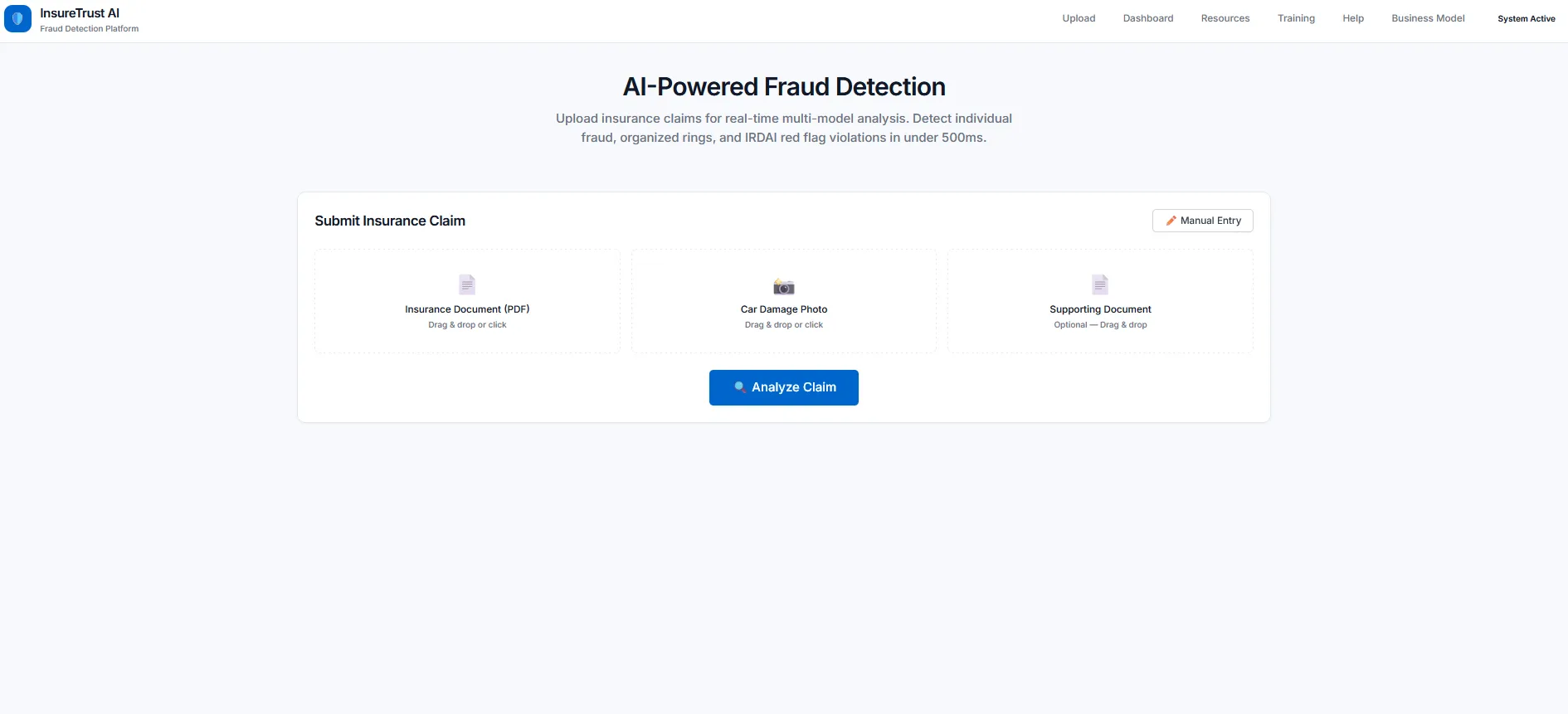
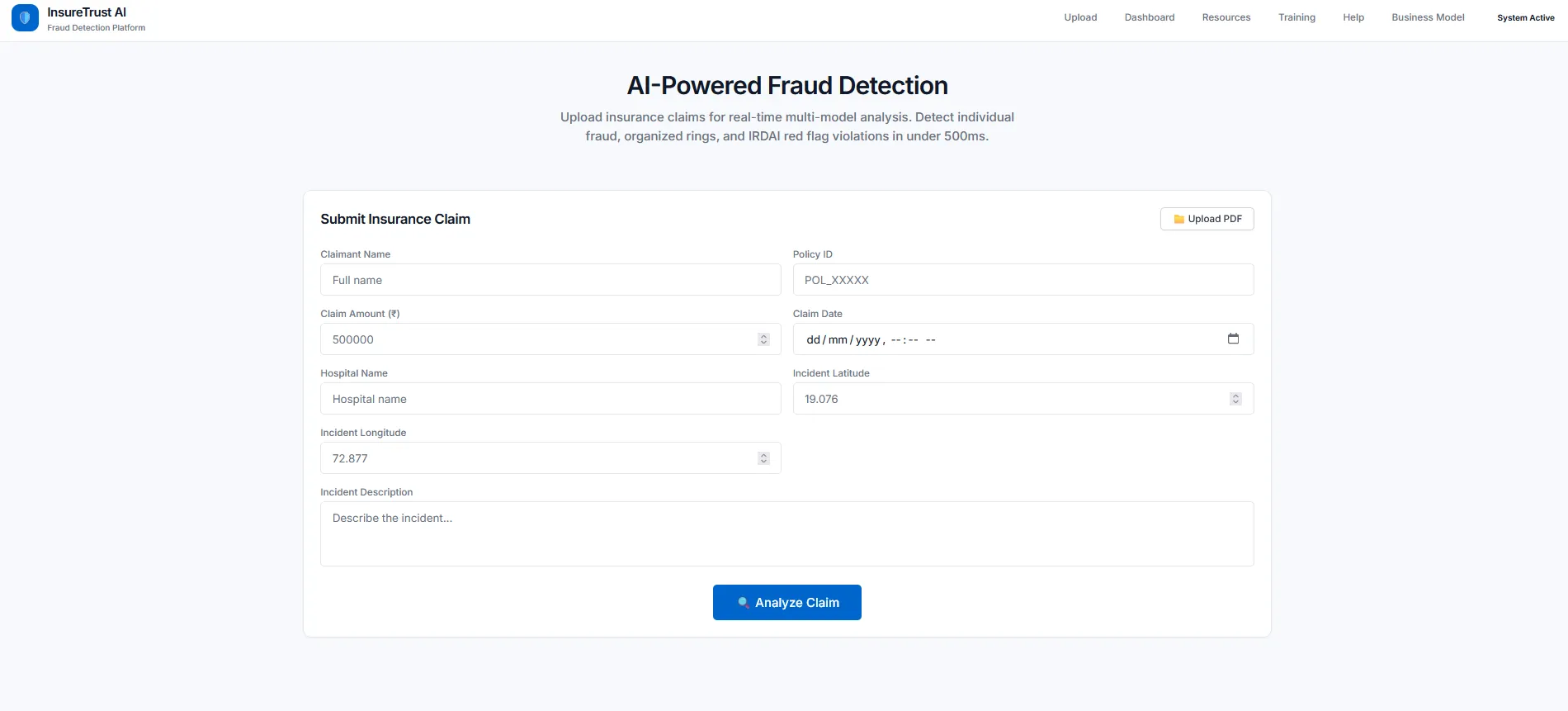
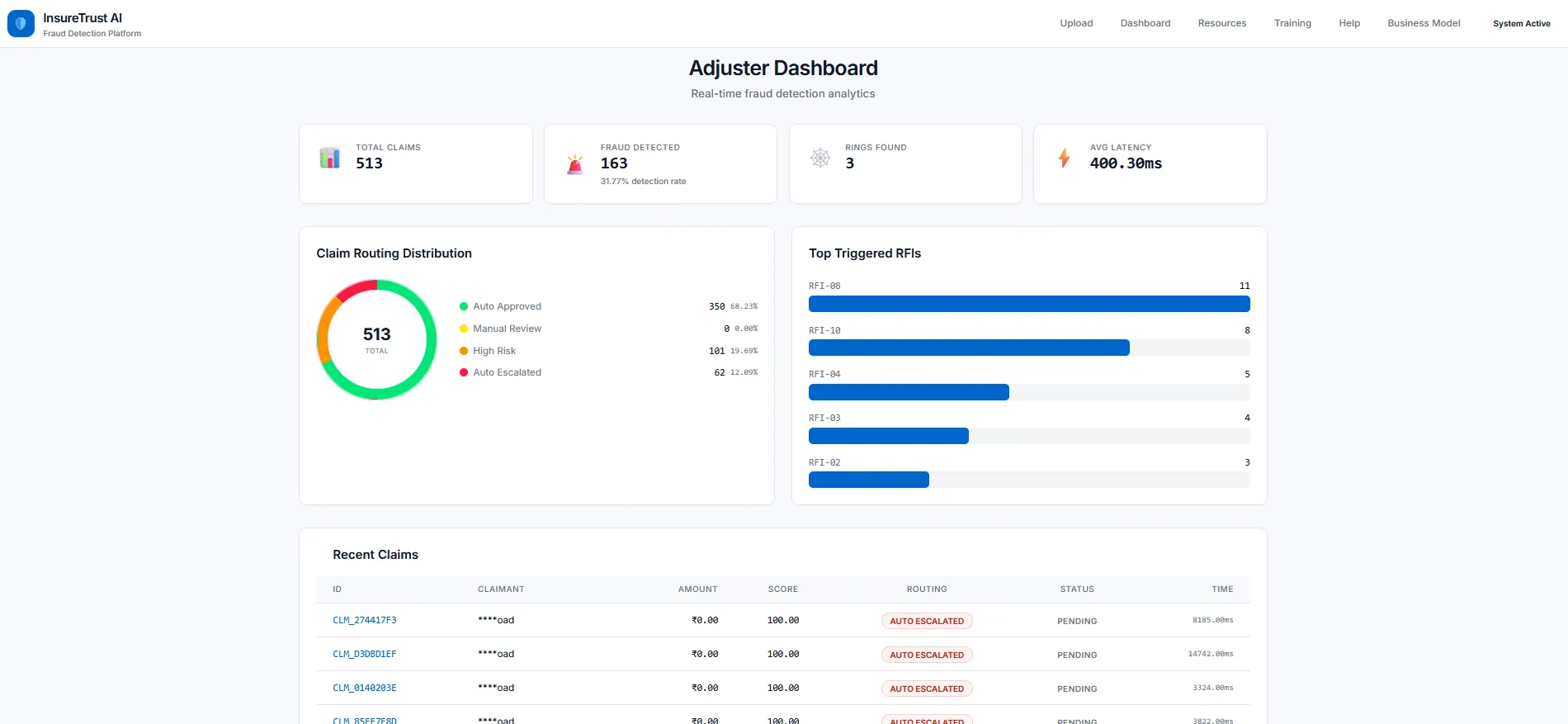
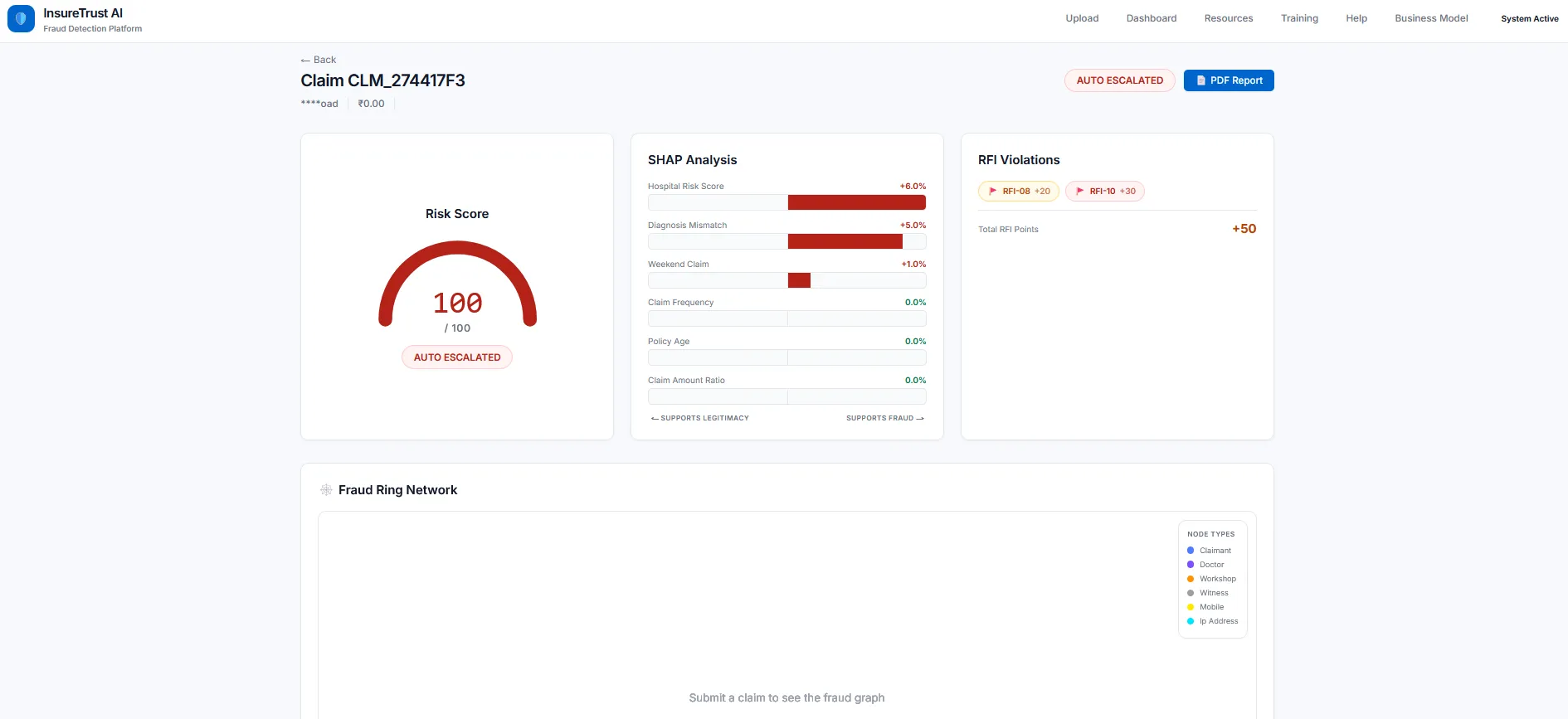
Watch the walkthrough on YouTube Walkthrough of the claim screening pipeline.